A Listening Session for a Rainy Afternoon: Follow One Instrument
A listening session for a rainy afternoon can reveal how one instrument enters, changes role and leaves room for others, without turning a song into homework.
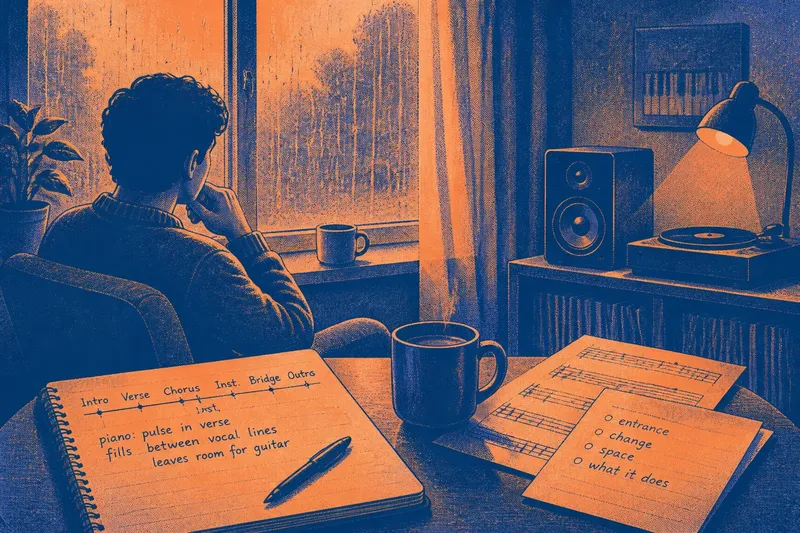
Rain ticks against the window as a song plays from the kitchen speaker. A listening session for a rainy afternoon can start with one instrument: follow the bass, piano, drums or backing voice and notice how its part shapes the arrangement.
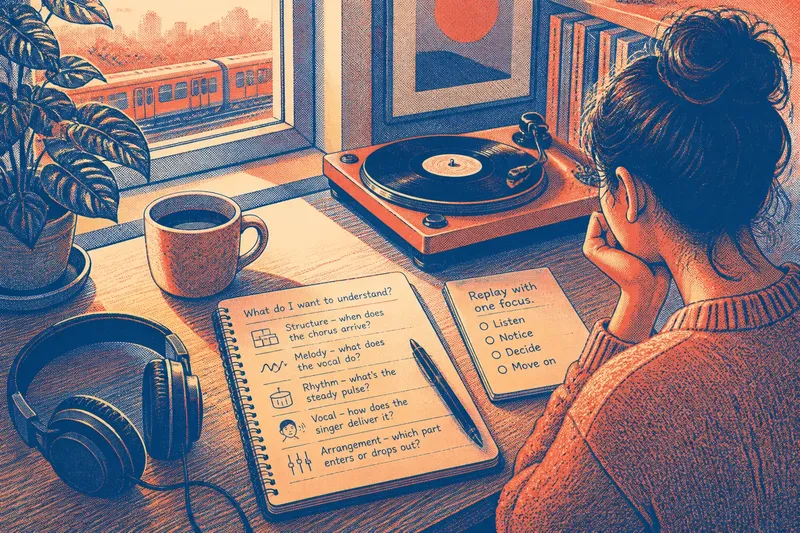
You do not need music theory or special equipment. Choose a track you can replay, then decide whether you want to listen by ear, use a lyric sheet or make a few notes. The aim is to hear the instrument’s place in the song, not to account for every sound.
Which instrument should you follow?
Start with a sound you can recognise. If you can hum the bass line, tap the snare pattern or pick out a keyboard melody, that instrument is a clear choice. A less familiar part can be interesting too, especially if a score or transcription can help you identify it.
Consider the arrangement. In a dense mix, a quiet inner voice may be difficult to separate; in a sparse recording, changes in a guitar, piano or percussion part may stand out. Use a version you already enjoy rather than searching for a supposedly perfect recording.
Choose one specific part, not a broad idea such as “the rhythm”. If you cannot tell whether a low sound is bass or keyboard, switch to a clearer instrument and return to the uncertainty another time.
Should you listen by ear, use a guide or take notes?
How do I follow an instrument by ear?
Listen to the track without pausing and keep your attention on the chosen sound. Notice where it becomes distinct, what it does as the song develops and whether it falls quiet before the ending. This approach suits a relaxed listen to a familiar track.
Can lyrics or a score help me listen?
A lyric sheet can mark verses, choruses and instrumental passages without showing the arrangement. A score or reliable transcription may clarify a hard-to-hear part, but it can draw your eyes away from the performance; use it as a reference rather than letting it replace listening.
What should I write down?
Keep notes brief: mark an entrance, a change and a moment of space, using a section name or time marker to locate each one. Add a few plain words about what the instrument does. You do not need to transcribe the notes.
How do you recognise entrances, changing roles and space?
Notice when the instrument first becomes clear. It might be present from the opening, join after a vocal line or appear only in a later section. If several sounds overlap, identify the moment when the chosen part becomes easiest to recognise.
Then describe its job in ordinary language. A piano might mark the pulse under a verse, fill the gaps between sung phrases and carry a melody during an instrumental section. A drummer might keep a steady pattern while bringing different parts of the kit forward.
Listen for what happens when the instrument leaves space. It may stop, soften or hold a note while another sound answers. The gap can make room for a vocal phrase or a different instrument, so notice what comes just before and after it.
Imagine you choose a piano-led song and hear the piano marking a regular pulse under the first verse. You then notice that it becomes busier between vocal lines and pauses while a guitar answers. Write “pulse, fills, leaves room for guitar”: that captures the change without a full transcription.
Which listening method suits your aim?
- Listen by ear: Check whether you want an uninterrupted experience. If you can keep track of the chosen part, stay with this method; if another sound masks it, use a lyric sheet or switch to a clearer instrument.
- Use a lyric sheet: Check whether you lose track of verses and choruses. If the words give you useful landmarks, keep the sheet nearby; if reading distracts you from the performance, put it aside.
- Use a score or transcription: Check whether you can identify the notes or part from the recording alone. If the notation clarifies what to follow, refer to it briefly; if it pulls your attention away, return to listening without it.
- Make brief notes: Check whether you want to remember a change in the arrangement. If a few words help you locate it, keep the notes; if writing interrupts your attention, leave them until the track ends.
- Change the instrument: Check whether the chosen sound remains hard to distinguish from another part. If a clearer instrument is present, follow that instead; if you still want to pursue the original sound, mark the uncertainty rather than guessing.
- Adjust your listening position: Check whether the part is obscured from where you are sitting. If another comfortable speaker position makes it easier to hear, move there; if not, choose a clearer part rather than turning playback up to force the detail.
How many listens do you need?
Give the track a few distinct listens rather than replaying it until the exercise feels like work. Use one to hear the song as a whole, another to notice the instrument’s entrances and changes, and an optional one to check a moment that caught your attention. If you already know the track well, begin with the focused listen.
If the sounds start to blur together, pause. Jot down a section name, refill your mug or let the room go quiet before continuing. If you still cannot follow the part, choose a more obvious entrance or switch instruments; attention matters more than endurance.
What can you do when the instrument is hard to hear?
Follow a distinctive feature instead of trying to isolate every note. With drums, listen for the kick or a recurring cymbal sound; with backing vocals, notice when a harmony joins the lead. If the part is still obscured, try a comfortable speaker position or use a clearer recording; do not turn playback up simply to force a faint sound into focus.
When two instruments overlap, listen for what continues after their initial sounds. A bass note and kick drum may begin together, but one may continue after the other has faded. If you cannot confidently distinguish them, note the uncertainty and choose a different passage or instrument.
What should you listen for next time?
Name one specific change you noticed: an instrument joined, took on a more melodic role or made room for another sound. That is enough to give a future listen a useful point of focus without turning music into an assignment.
Keep any notes beside the track if they help. The next time the song plays, listen for how the instrument shares space with the rest of the arrangement.